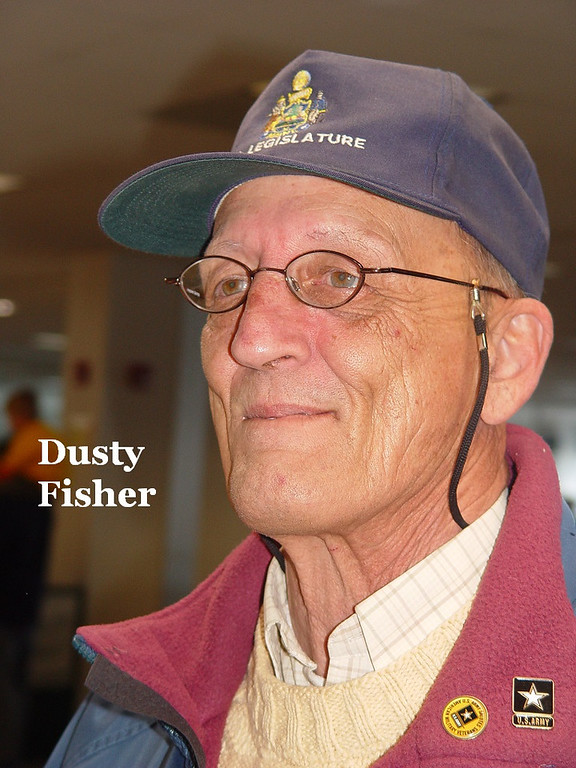
Dusty (Charles) Fisher
The Early Years
Dusty was born in Providence, RI, where he lived for one year. His family then moved to Toledo, OH, where he “came of age.” After graduating from high school, he found work in a factory. In the winter of 1960, he happened to run into an old friend who was studying at Findlay College. He started to hang out with him and his college friends. It was so much fun that he decided to enroll in Finley College himself, which he attended for about a year and a half. This experience showed him that he could achieve success if he set his mind to it. However, he had just “too much fun” and left to join the Army.
Military Service
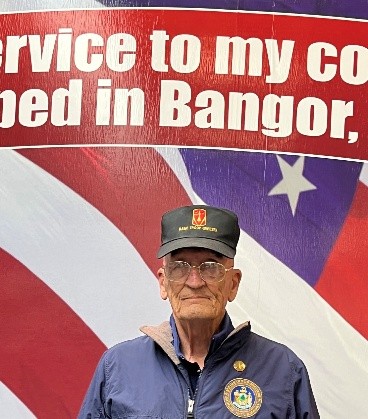
He did his basic training at Fort Knox, though he was sick during most of it. After basic training, he was sent to the Pittsburgh NORAD (North American Air Defense Command) district as a radar operator. Over the three years, he worked in the 31st ADA (Air Defense Artillery), finding targets and working in communications. In fact, one of the skills he perfected was learning to write backwards, since he had to write the targets on plexiglass for the operators on the other side; a skill he even used when teaching high school, much to the students’ surprise. He is still in contact with the remaining members of the crew.
Returning to Civilian Life
After leaving the Army, Dusty enrolled in the University of Toledo, Ohio, where he earned his degree in education. He would earn two more degrees at the University of Maine.
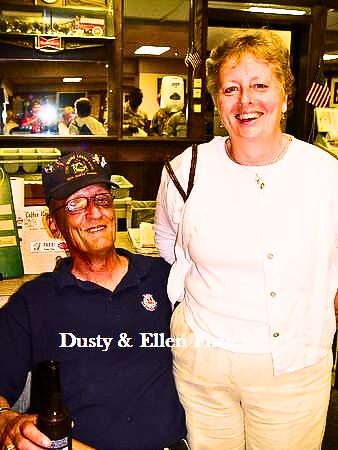
As a kid, he spent his summers in Maine at his grandfather’s place, so upon graduation, he decided to move to Maine, where he got a job at Brewer High School teaching history to juniors. He stayed in this job for 26 years, influencing many young people over the years. Just three weeks after moving to Maine, he visited the historic “Black House” in Ellsworth with family. The tour guide was a lovely young woman. Dusty said that since she did such a great job with the tour, he married her! This partly explains why, while he intended to stay in Maine for 2-3 years, he is still here 55 years later, happily married to the love of his life, Ellen! She has also been a Maine Troop Greeter.
Maine Public Service
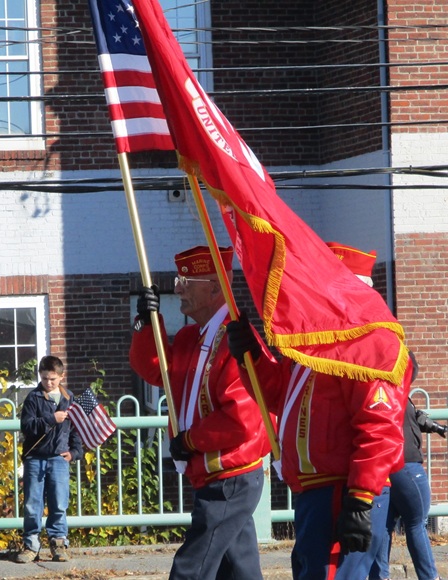
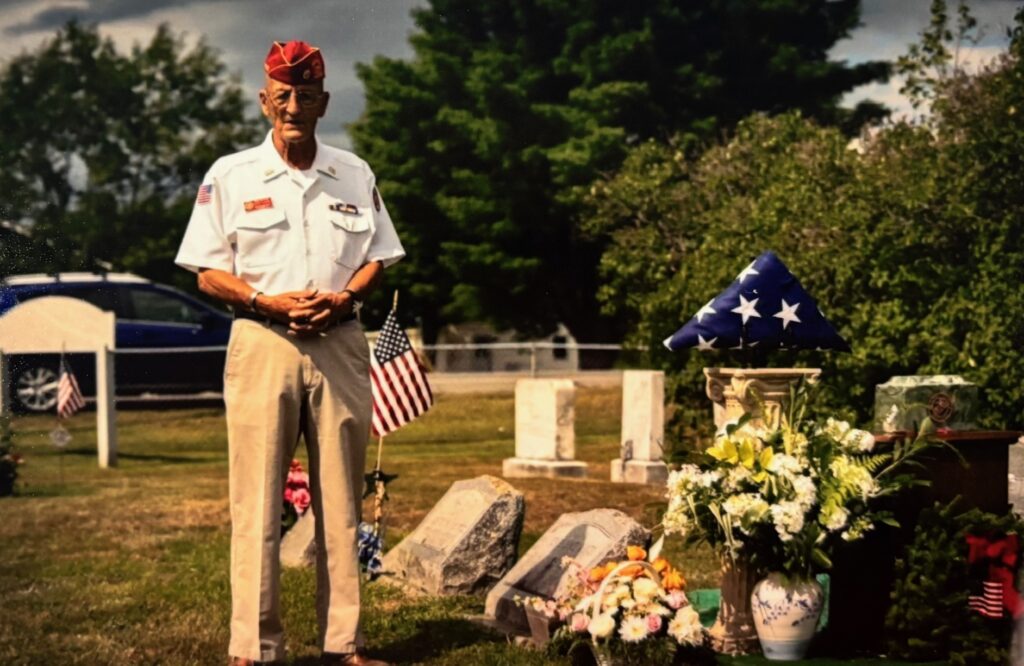
Dusty was always involved in public service. He ran for and was elected to the Maine State Legislature in 1994, where he served for eight years. He took a two-year break and then served for another four years until 2008. In 1997, some Korean War Veterans asked him if he could help them get a Korean War license plate. Unfortunately, at that time, there was a moratorium on new license plates. However, over the years, Dusty persevered and eventually succeeded in getting one for them. He became involved in Korean War Veterans events and is now the President of the Korean War Veterans Association. He also became involved with the Marine Corps League when he attended many Veteran events where the Marine Corps League participated. He got to know them and was invited to even more events. Eventually, they invited him to join them as an associate Marine Corps League member. He is also involved with the Maine Infantry Foundation and was the first Maine civilian inducted into the Order of St. Maurice of the National Infantry Association.
Maine Troop Greeters
In June of 2003, Dusty met up with Fred Harden, a troop greeter. Fred mentioned that the greeters were back in action again. Dusty asked him to call when a flight was arriving. He did, and Dusty has rarely missed a flight since, over 90% of the nearly 8000 flights, notably at all hours of the day and night. While many people would come out during the day, often, it would only be Dusty, Gerry Mundy, and a few others in the early years who would be there in the middle of the night. The only time he missed a flight was if he had a vote in the legislature that could not be missed. Dusty and Gerry became close friends over the years. Gerry would often park near the airport to watch the planes landing, and Dusty would often join him, jumping into the truck to watch and chat
Stories
Dusty has innumerable stories, but here are a few from a BDN article: https://www.youtube.com/watch?v=YkGcICgDGt0 Dec. 9, 2021
“We let them know that we cared about them. That was made clear one night when I was out in the smoking area, talking with some Seabees. A young woman came out through the door and started crying. I asked if she was okay. She replied, “You were standing here a year ago and told me that you’d be here when I got back.”
“I also met an LT COL from Toledo, Ohio. the son of a guy who taught where I student-taught. I also met the grandson of a very tough basic training sergeant I had faced 40 years before during basic training. His name was Israel Alicia, and so was the kid’s name. I have difficulty remembering names, but I’ll never forget his. Nor will any other guy who had him as a drill sergeant during basic training!”
“General John Kelly (former Chief of Staff during the first Trump administration) came through Bangor four times. In one of his letters to me, he refers to our “ambushing” him several times, as well as his sons, who were both Marines. He lost one son on 11 November 2009. He would keep in touch. Once from Baghdad just before Christmas, the year he led the Marine division there, he told of the loss of two of his Marines during that deployment, which was again, very sad.”
“There are a lot of sad stories of missed days: birthdays, births, holidays, anniversaries, games, and graduations. Then there are stories of broken homes, and just as hard, maybe worse, for the times when one of the troops would take me over to the KIA casualty book that usually sits on a table outside the Troop Greeter room to show me his buddy’s name.”
“One of the ones on the K-I-A list was Alejandro Yazzie. He was a Navajo and a Marine, and was grandnephew of one of the Navajo code talkers in WWII. Our connection was that Yazzie went to high school in Kayenta, Arizona. I had looked into a job there 55 years ago. He came through Bangor three times. About a month after his third stop in Bangor, he was KIA; January 2009.”
“There have been some touching moments, such as the ‘butter bar’ Lieutenant who looked like she was twelve. I asked her if her folks were present when she pinned off. She said her father had pinned on the bars that were his and his father’s before him.”
“There was a woman who came into the Tennessee National Guard in her 30s. This was her first deployment, and she was afraid. We spoke for quite a while, and I gave her my card and suggested she email if needed. She did, and the correspondence has continued for almost 20 years. I often wear a 230th T-shirt she gave me on her return. That is the unit she served with in Iraq.”
“Why do we do this? I don’t like to speak for others, but I think we all feel the same way. We do it for this generation of troops to make sure they are not treated as the troops in the 60s were. We want them to feel appreciated, and we show it with hugs and smiles and tears and lingering handshakes. The letters from them and their families are further proof. Finally, we do this because it’s good for the soul, and probably everyone feels this way. I’ve been doing this since 2003. Each flight is just as rewarding as the first was. It hasn’t grown old.”